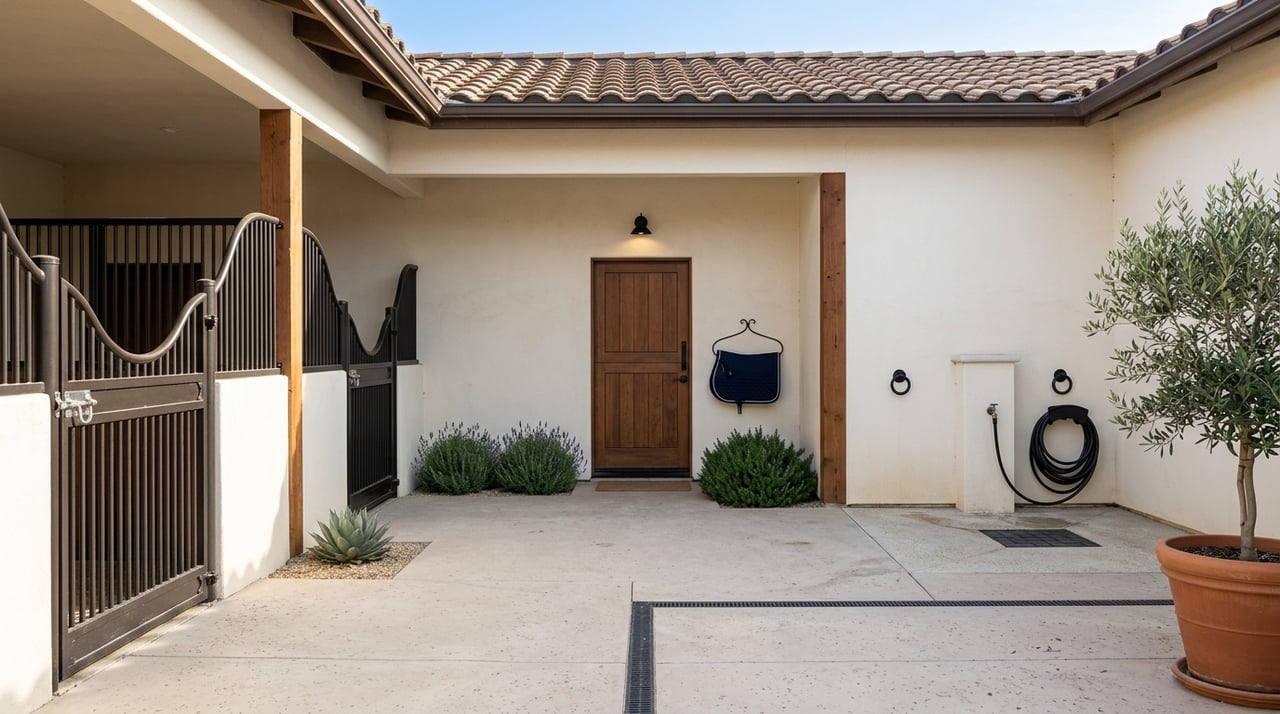
Buyer Basics for Santa Rosa Valley Equestrian Properties
May 7, 2026
May 7, 2026
Looking for a horse property in Santa Rosa Valley? It is easy to fall for a pretty barn, a large arena, or a trail nearby and assume the property will work for your plans. In reality, buying an equestrian property here means looking beyond the home itself and understanding how the parcel functions day to day. This guide walks you through the basics you should verify before you buy, so you can move forward with more confidence. Let’s dive in.
Santa Rosa Valley has a strong rural and equestrian identity, which is a big part of its appeal. Ventura County planning materials describe the area as rural residential, and many properties are set up to support horse ownership with features like barns and arenas.
That said, these properties are best understood as rural operating parcels, not standard suburban lots. One county planning document notes that the densest zoning allows one dwelling unit on a minimum of one acre, which gives you a sense of the area's low-density pattern and land-focused character.
One of the biggest mistakes buyers can make is assuming a property can support horses just because nearby parcels do. In Ventura County, animal keeping is controlled by the non-coastal zoning ordinance, and the number of equines allowed depends on zoning, lot size, and in some cases waivers or prior approvals.
Some zones allow equine units only under specific rules, and some zones do not allow animal keeping at all. That means you should confirm horse use parcel by parcel, rather than relying on the neighborhood look or the seller's setup.
Before you get attached to a property, confirm its zoning and lot area. Those details affect whether the parcel can legally support the number of horses you want, as well as whether future changes may be possible.
If your plans include more stalls, boarding, or expanding an existing setup, this step becomes even more important. A parcel that works for one owner's current use may not automatically work for your intended use.
Horse properties often come with extra structures, and those structures deserve close review. Barns, tack rooms, hay storage, detached sheds, corrals, trailers, and even equipment staging areas may all be subject to county rules.
Ventura County says detached non-habitable accessory structures generally must be at least 3 feet from interior and rear lot lines, and they may occupy no more than 40 percent of the rear setback area. These rules are meant to help prevent overcrowding and support fire safety and emergency access.
A good buyer review should include a permit audit. Ventura County's Condition Compliance Program says county staff check whether structures such as buildings, sheds, and metal cargo containers match approved site plans, and the county states that all structures must be permitted.
That is why it is smart to pull permit history for improvements on site and compare what exists today with approved plans. A barn or shed that looks useful can become a problem if it was built or placed without proper approvals.
In Santa Rosa Valley, septic feasibility is not a side issue. It can directly affect your plans for the property, especially if you are considering extra bedrooms, an ADU, boarding activity, or a larger horse operation.
Ventura County says each new onsite wastewater treatment system must be evaluated individually before a permit to construct is issued. System design depends on factors such as bedroom equivalents, plumbing fixtures, tank capacity, soil permeability, groundwater depth, geologic conditions, slope, hill stability, and nearby waterbodies.
County planning materials specifically flag Santa Rosa Valley for septic-system limitations due to high nitrates. Ventura County water-quality documents describe the Arroyo Santa Rosa Basin as nitrate impacted, with septic systems, agricultural fertilizer, and horse boarding among the sources discussed in local groundwater materials.
For you as a buyer, that means manure handling and drainage are not just routine maintenance topics. They can also be part of environmental review and long-term operating responsibility.
County guidance also notes that if a property needs a conventional onsite wastewater treatment system and is within 200 feet of an available public sewer line, it must connect to sewer. That is another reason to verify utility and wastewater conditions early in your due diligence.
If you are planning any level of horse boarding or animal husbandry, expect manure handling to be more than a practical chore. Ventura County Watershed Protection District may ask for a Manure Management Plan, depending on the use.
County guidance asks applicants to document manure cleanup frequency, storage locations, runoff controls, and groundwater protections, including impermeable manure-storage surfaces when needed. The same guidance notes that a 1,000-pound horse can produce about 9 tons of manure per year, which gives you a realistic sense of the scale involved.
UC ANR horse-keeping guidance identifies common problem areas at horse facilities as roof runoff, high-use areas, manure management, pasture management, water resources, and roads, trails, and stream crossings. It also emphasizes that regular maintenance is crucial and that drainage and erosion control are part of responsible horse-property ownership.
In practical terms, you should budget time and money for ongoing upkeep. Even a beautiful property can become harder to manage if drainage, footing, or manure storage were not planned well.
Wildfire protection is another major reality for rural property ownership in Ventura County. Ventura County Fire Protection District says properties in State Fire Hazard Severity Zones or local hazardous fire areas must maintain defensible space.
Common requirements include 100 feet of clearance from structures and 10 feet for road access. The district also states that a 5-foot non-combustible Zone 0 applies to new buildings and additions effective March 1, 2025.
For equestrian properties, fire safety is not only about brush clearance. Barn placement, storage areas, trailer access, driveway width, and emergency access all affect how usable and resilient a property may be.
When you tour a property, it helps to think like an operator. Ask yourself how equipment moves, where hay is stored, and whether access routes seem workable for both daily use and emergency response.
Santa Rosa Valley does offer meaningful riding amenities. Ventura County Parks says Santa Rosa Valley Park includes 50 acres of open space suitable for horseback riding, two equestrian riding areas with a training area, horse-trailer access, and connections to local trails.
That is the good news. The more nuanced part is that the wider trail system is not always as simple as it looks from a listing description.
The Santa Rosa Valley Trail Master Plan says the area includes equestrian routes and bikeways, and that many early subdivisions created trail easements. It also notes that riders use some street surfaces and shoulders, and that the network is somewhat disconnected.
The same county plan states there is not currently dedicated county funding for new trail development and maintenance, so future improvements may depend on other entities. For buyers, the key takeaway is simple: verify whether a nearby trail segment is public, easement-based, or HOA-maintained before treating it as a permanent riding amenity.
If you are serious about buying an equestrian property in Santa Rosa Valley, focus on the basics early. A little extra verification upfront can save you from expensive surprises later.
Here is a practical checklist to keep in mind:
The right Santa Rosa Valley horse property can be a fantastic fit, but the best purchase is usually the one that works both emotionally and operationally. You are not just buying a house with land. You are buying a property that needs to support your goals, your horses, and the realities of rural ownership.
That is why local due diligence matters so much. When you understand zoning, permits, septic, trail access, and maintenance obligations before you close, you are in a much better position to choose a property that truly fits your plans.
If you are exploring Santa Rosa Valley equestrian properties and want experienced local guidance, Joanne Carolan can help you evaluate the details that matter and move through the process with confidence.
Stay up to date on the latest real estate trends.
We pride ourselves in providing personalized solutions that bring our clients closer to their dream properties and enhance their long-term wealth.